An immersion in the world of Rilke

The Fondation Rilke manages a library, an archive and a museum, all dedicated to the poet's life, work and reception.

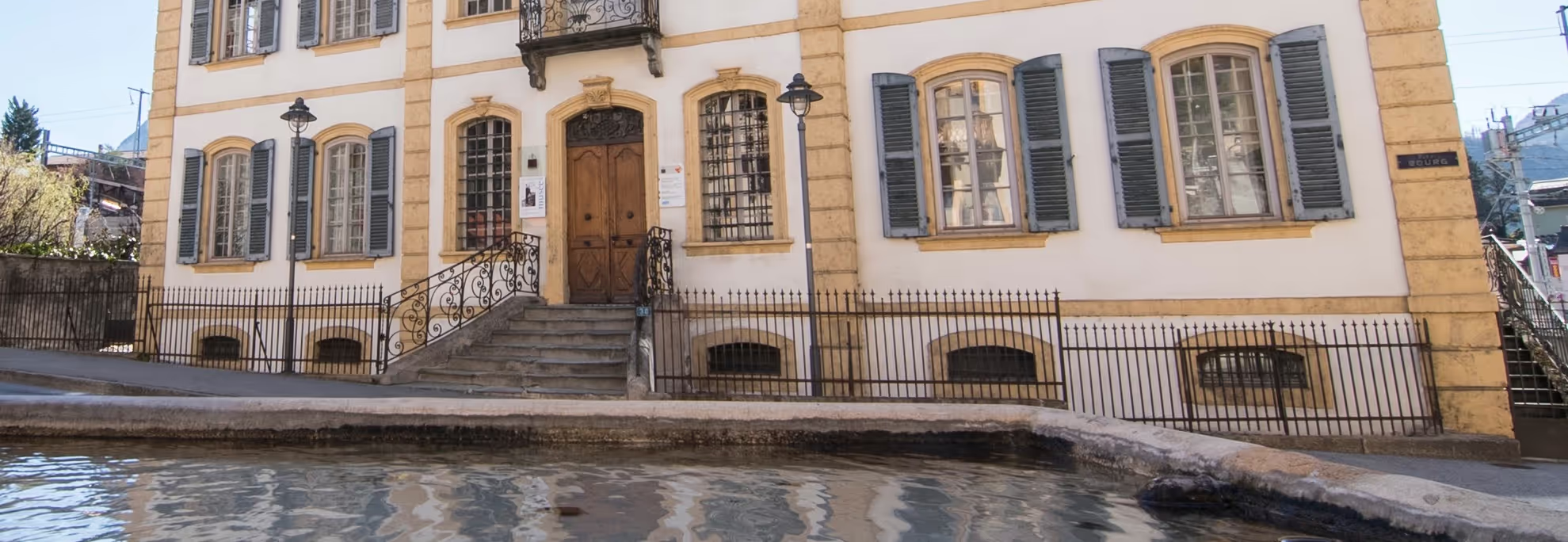
Historic 18th-century building

Collections: 25,000 objects
Experience for all five senses

Bookstore & educational resources

Rilke Paul Valéry and Henri Valette

Rainer Maria Rilke:
a poet between heaven and earth

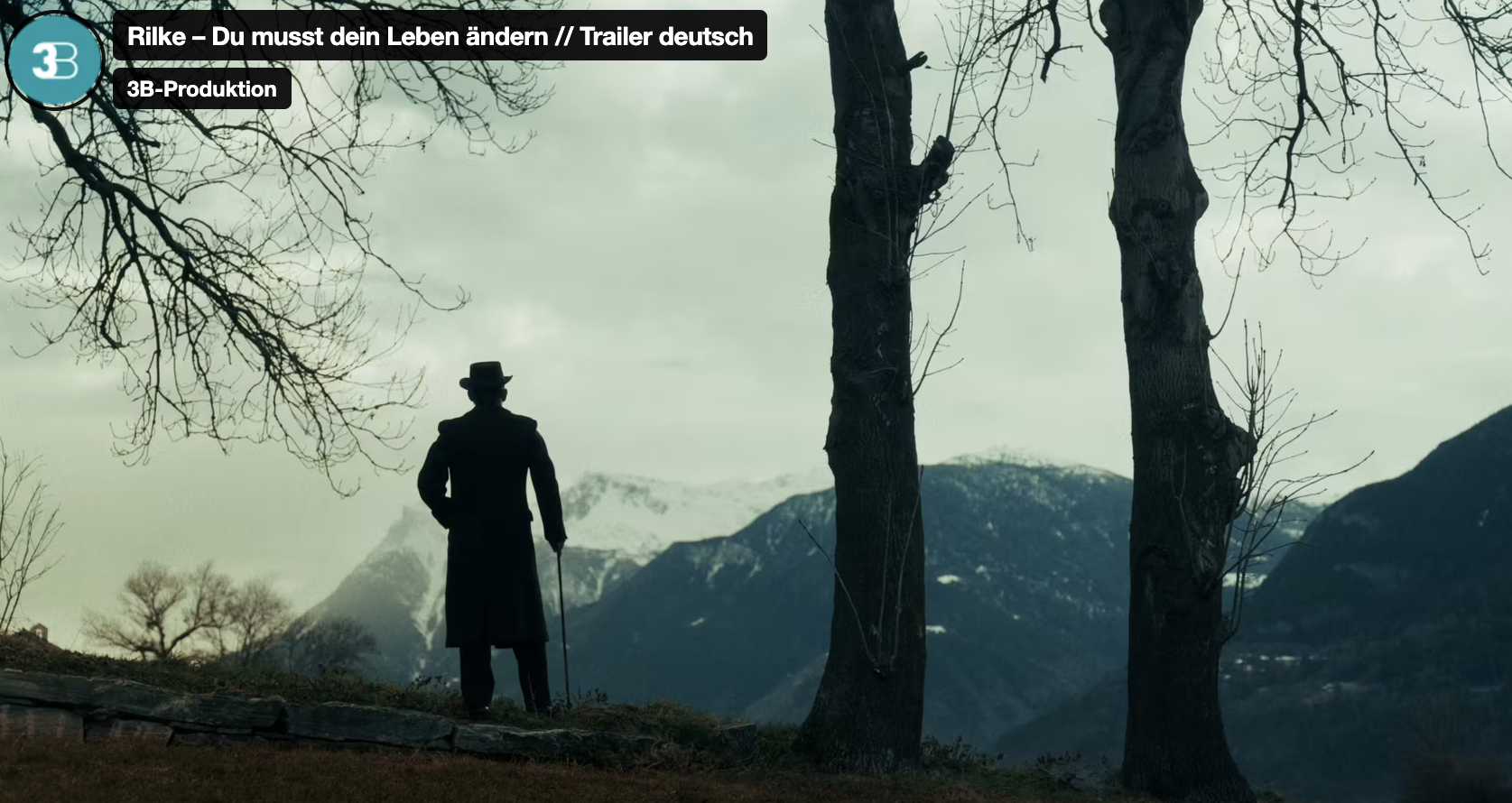
Rainer Maria Rilke (1875-1926) was one of the most important poets of the 20th century. After years of travel, he settled in Valais, where he completed his major works, the Duino Elegies and the Sonnets to Orpheus, which had a lasting impact on world poetry.

Rilke: LIFE

1875 On December 4, René Maria Rilke is born in Prague. He is the son of railroad employee Josef Rilke and his wife Phia.

1886-1891 Military school. Rilke is already writing poems and short stories.

1894 Publication of his first collection of poems, "Leben und Lieder".

1895 Graduates from high school in Prague and begins studying art history and literature.

1896 Starts studying philosophy at Munich University. Meets writer Lou Andreas-Salomé. First lover, then lifelong friend and confidante.

1897 Rilke follows Lou to Berlin. He changes his first name from René to Rainer.

1898 Florence, Viareggio. First draft of the "White Princess".

1899 Enrolls in art history at the University of Berlin.

1899-1900 With Lou, he makes two trips to Russia and begins studying for a monograph on Russian painters (later abandoned). Meets Tolstoy.

1900 Rilke spends the summer at the Worpswede artists' colony. There he meets painter Paula Modersohn-Becker and sculptor Clara Westhoff, a former pupil of Rodin.

1901 He marries Clara Westhoff. The couple settle in Westerwede, near Worpswede. Birth of only daughter Ruth.

1902 Rilke is commissioned to write a monograph on Rodin. He travels to Paris and meets the sculptor. He begins the "New Poems" ("The Panther").

1903 Publication of his monograph on Rodin in Berlin.

1903-1906 During a trip to Viareggio, he writes "The Book of Poverty and Death". He travels to Rome, Denmark and Sweden. While continuing to write pieces for the "New Poems", he begins "The Notebooks of Malte Laurids Brigge", a prose narrative.

1905 Publication of the "Book of Hours" begun in Russia in 1899, continued in Westerwede and Viareggio.

1906 Rilke becomes Rodin's secretary. Publication of "The Lay of Love and Death of Cornet Christopher Rilke".

1907 Stay in Capri between December 4, 1906 and May 20, 1907.

1908 In memory of Paula Modersohn-Becker, who died after giving birth to a daughter in 1907, Rilke writes the "Requiem for a Friend". Between February 29 and April 18, Rilke stays again in Capri, then returns to Paris.

1909 Trip to Provence.

1910 He completes "The Notebooks of Malte Laurids Brigge", a work begun in 1904.

1910-11 Trip to North Africa and Egypt between November 19, 1910 and March 29, 1911.

1912 Invited by the Princess Marie von Thurn und Taxis to Duino Castle, Rilke writes his first "Elegies" and "The Life of the virgin Mary". With Lou Andreas-Salomé, he attends the Munich Psychoanalytical Congress and meets Sigmund Freud. He stays in Venice and travels to Spain (Toledo, Cordoba, Ronda).

1913 Travels and stays in Germany, then returns to Paris.

1914 Epistolary relationship with Magda von Hattingberg, known as Benvenuta, with whom he has an affair lasting several months. At the start of the First World War, Rilke writes "Five Songs"; he does not share the general exaltation, however. In Irschenhausen, near Munich, he has an affair with the painter Lou Albert-Lasard.

1914-1918 The outbreak of war prevents Rilke from returning to Paris. He looses his Paris apartment and spends the war years in Germany, mainly in Munich.

1915 Munich, "Fourth Elegy".

1916 Rilke is mobilized in Vienna. After a few weeks, he is assigned a light job in the War Archives. Discharged in July, he returnes to Munich.

1919 Following the revolutionary unrest in Munich, Rilke's apartment is searched. He accepts an invitation to go on a reading tour in Switzerland. Short stays on Lake Geneva, then in Soglio in Graubünden, Bern and elsewhere. Meets his future patrons, the Burckhardts, the Reinharts. Meets Baladine Klossowska (Merline) in Geneva. Writes a preface to "Mitsou", a collection of drawings by the 12-year-old Balthus (Baltusz) Klossowski.

1920 Stay at Berg-am-Irchel Castle, near Zurich.

1921 Rilke moves to the Château de Muzot, rented for him by Werner Reinhart.

1923 Publication of the "Duino Elegies" and "Sonnets to Orpheus", major works completed at Muzot in February 1922.

1924-1926 Translates several works by Paul Valéry. Met Valéry in Sierre and Muzot (1924), Paris (1925), Anthy (1926). He writes in French "Vergers", "Les Quatrains Valaisans", "Les Roses", "Les Fenêtres". Several stays at the Val-Mont sanatorium, above Montreux. Rilke suffers from leukemia.

1926 Rainer Maria Rilke dies in Val-Mont on December 29. In accordance with his last wishes, he is buried in Raron on January 2, 1927.

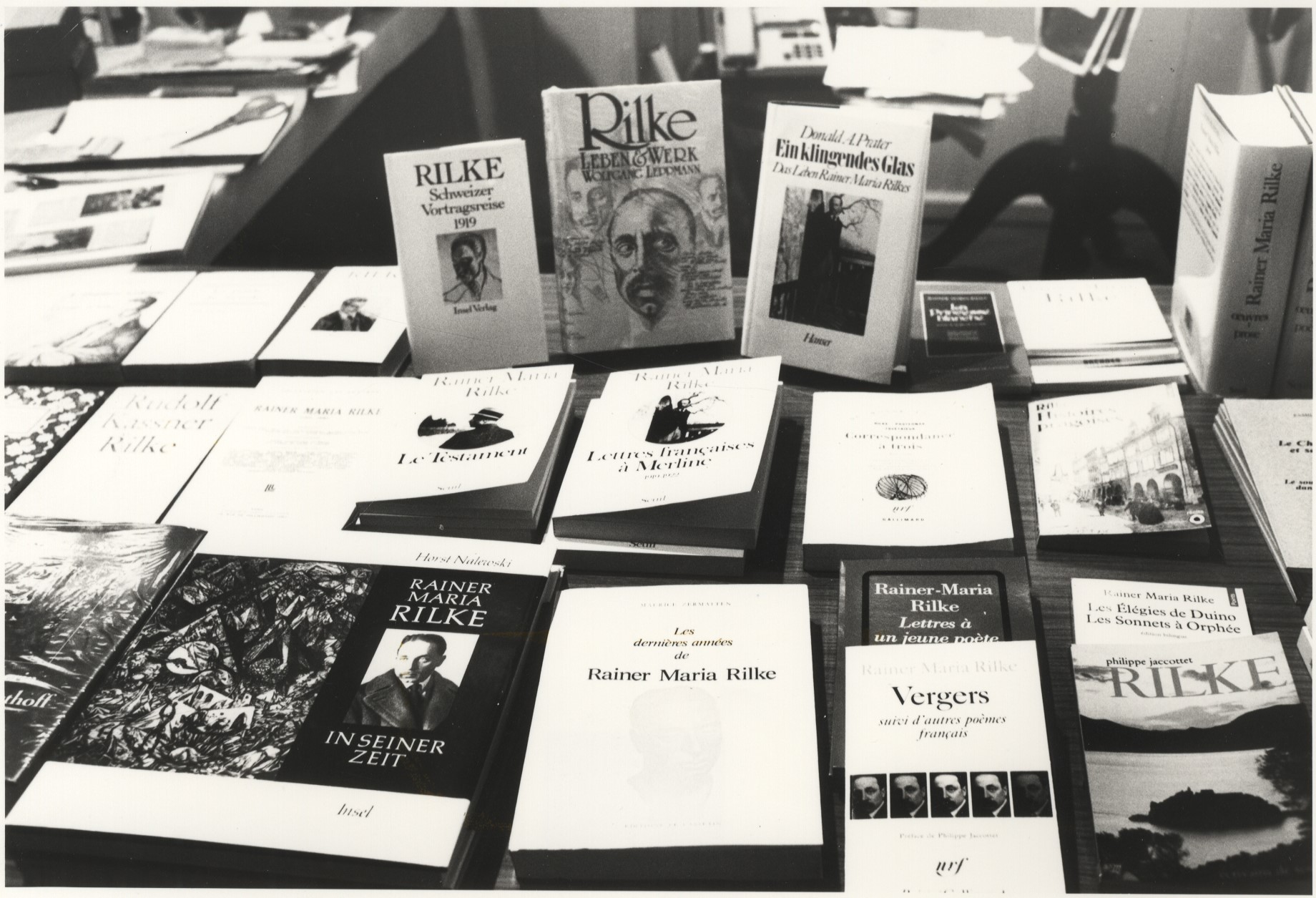
For further details, please consult the biographies available in the Foundation's bookshop.

Works written in the Valais

Works in German

During the First World War, Rilke felt unable to complete the Elegies he had begun at Duino Castle. It was not until February 1922 that he overcame the difficulties. After completing the Duino Elegies at the Château de Muzot, he wrote the Sonnets to Orpheus.

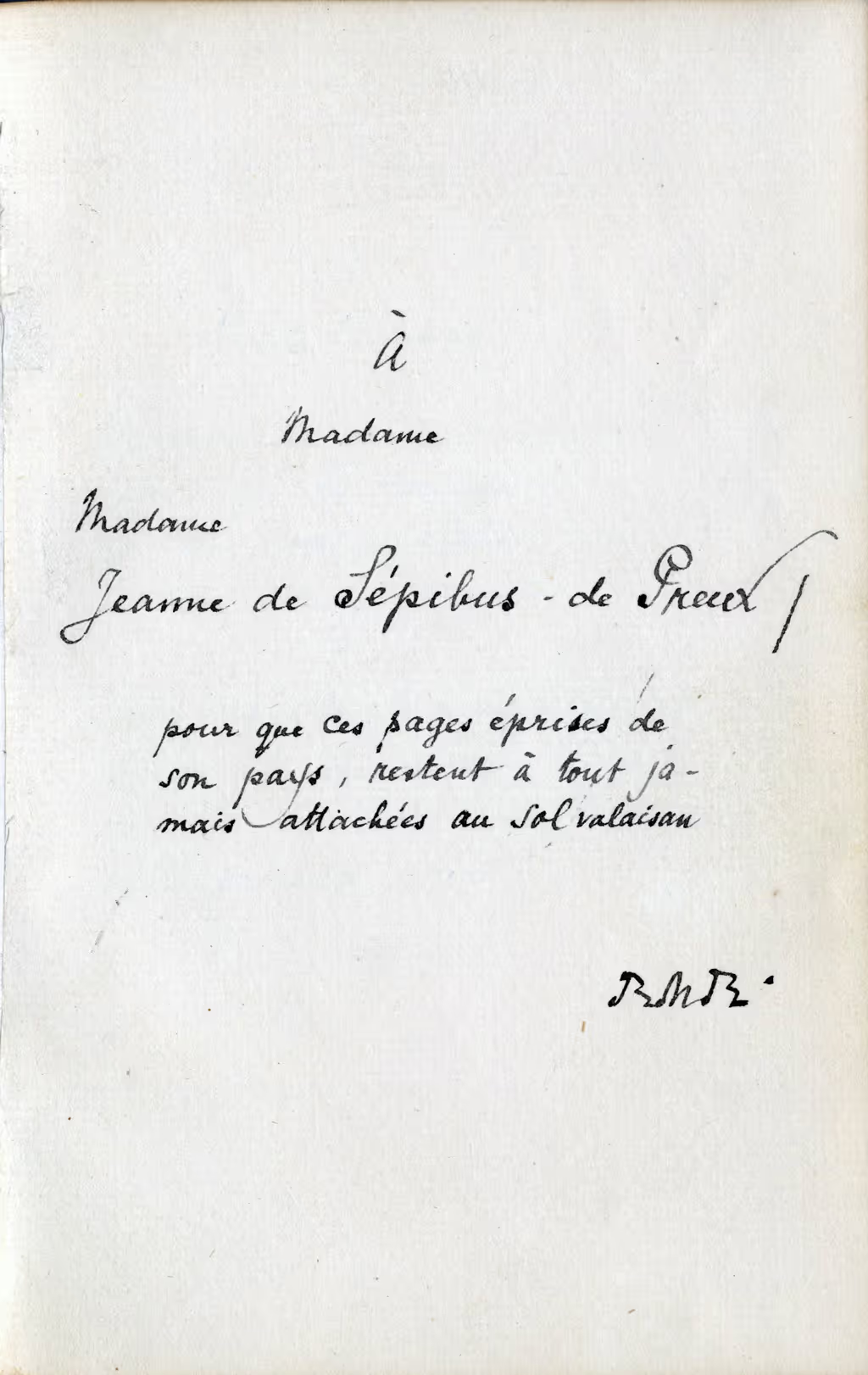
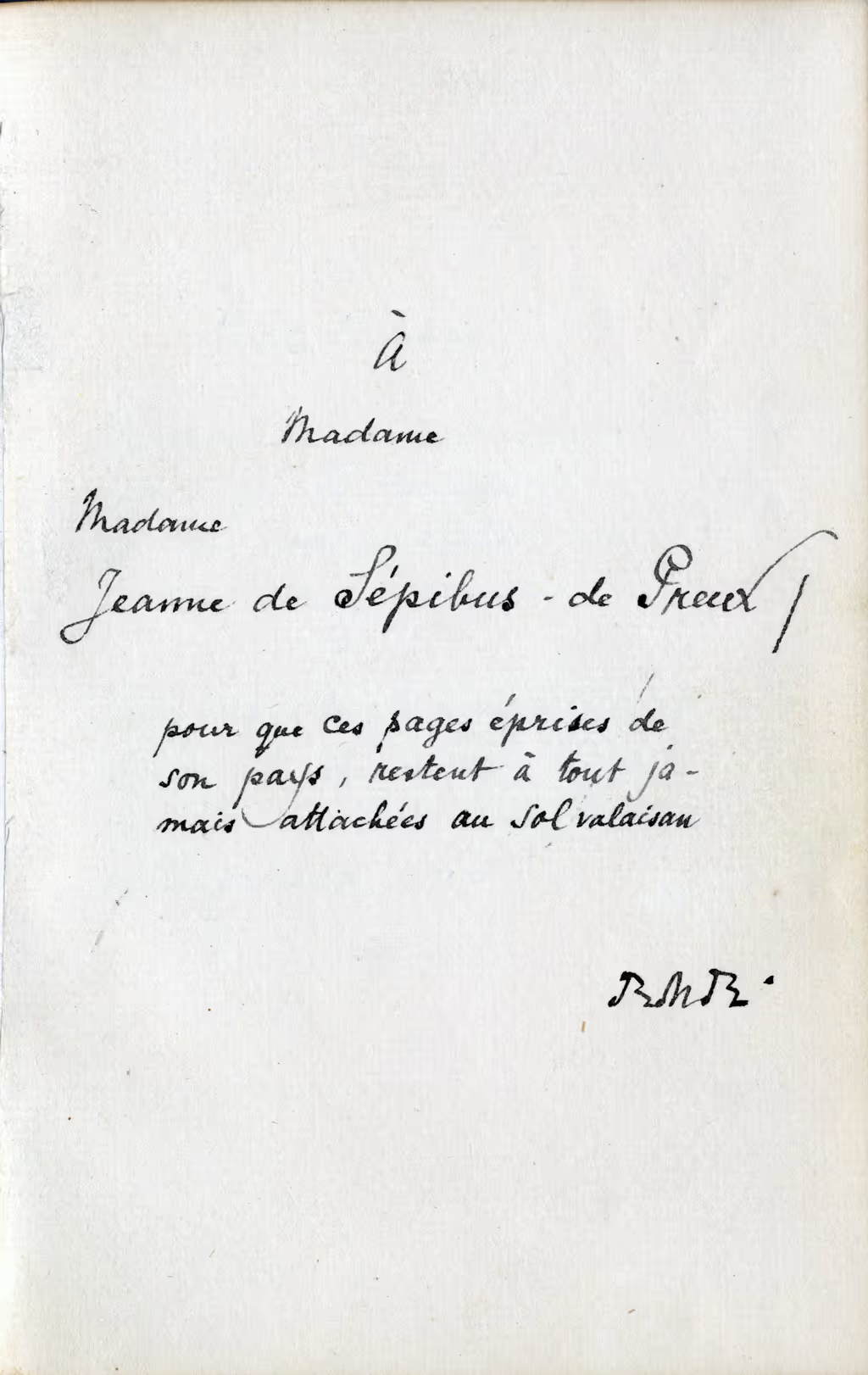
Dedication to Jeanne de Sépibus. Fondation Rilke.

Works in French

Rilke had a profound knowledge of French literature. Throughout his life, he wrote letters in French, establishing a vast network of correspondences. However, it was not until he arrived in Valais that he began to write cycles of poems in French: Les Quatrains Valaisans, Vergers, Les Roses and Les Fenêtres.

Places in the Valais linked to the poet
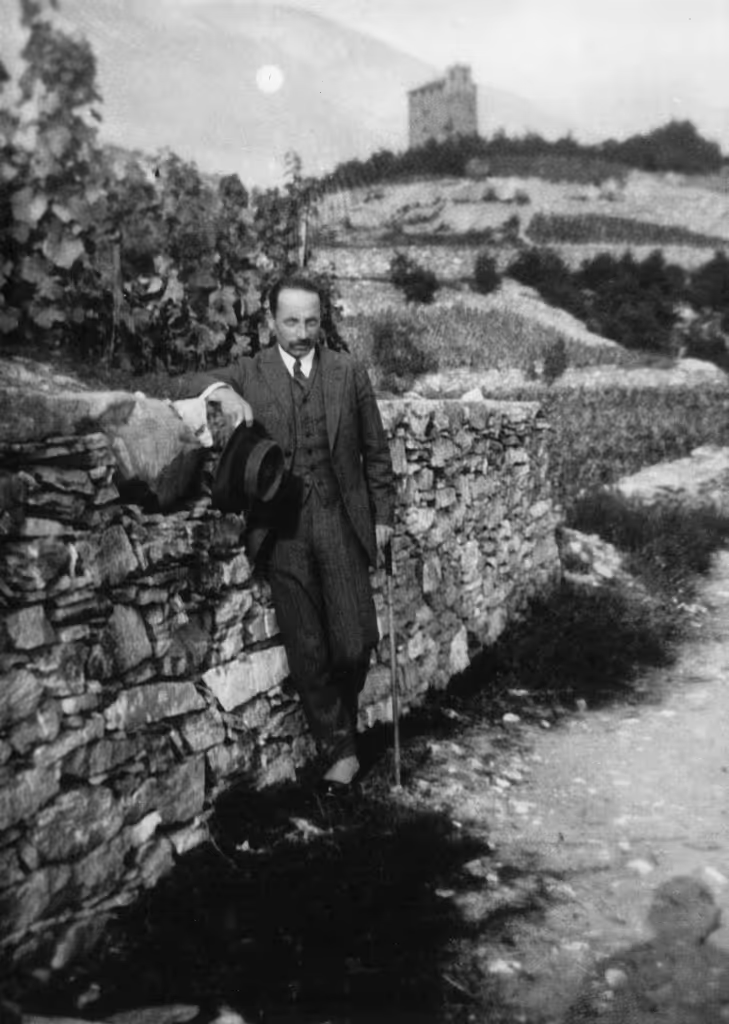
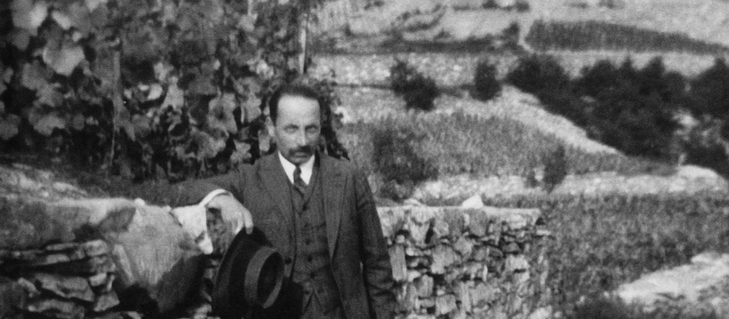
Rilke in the vineyards. Fondation Rilke.

MUZOT

The medieval tower where the poet completed his major works is located in Veyras above Sierre. Today, the building and garden are privately owned. Visitors can follow in the footsteps of Rilke, who undertook walks in Venthône, Mollens and the Bois de Finges.

MUZOT CHAPEL

Rilke carried out some renovation work. Dedicated to the Presentation in the Temple, the chapel was known as "Sainte-Anne" in Rilke's day. The chapel is located near Muzot. It contains an image of the Virgin and a lamp donated by Rilke's mother in 1930. They come from the entrance portal of Rilke's parents' house in Prague. To commemorate Rilke's birthday, the Foundation organizes an annual concert at the Muzot Chapel.

LOÈCHE-LES-BAINS

A single, brief excursion on July 13, 1923. Rilke made his way to Leukerbad, via Varen and along the wild Rhone between Sierre and Leuk, notably in the company of Jean Strohl.

SIERRE

When Rilke arrived in Sierre, he stayed at the Hôtel Bellevue. In what is now the Hôtel de Ville, a Rilke room pays tribute to the poet. The rue Rainer Maria Rilke is also a reminder of the famous guest.

SION

Rilke often visited the capital of Valais, with its hills of Valère and Tourbillon.

RARON / RAROGNE

A visit to Rarogne on August 16, 1921. On Sunday, October 8, 1922, he went there to attend a performance. The local farmers performed a play by René Morax, Die Quatembernacht, in the German translation by Jakob Bosshart. In his last will and testament (October 27, 1925), Rilke chose Rarogne as his final resting place. A memorial room in the Museum auf der Burg, opposite the old church (Burgkirche), is dedicated to his memory. The Fondation Rilke holds temporary exhibitions there.

LENS AND CORIN

On September 30, 1921, Rilke took Baladine Klossowska on an excursion to Lens, a hilltop town between Sierre and Sion. He returned several times to visit Corin's chapel.

PFYN-FINGES NATURE PARK

The space and texture of the landscape inspired Rilke to draw comparisons with music, painting and sculpture. Today, the Fondation Rilke collaborates with the Nature Park by organizing guided walks in the poet's footsteps.
Our collections

With more than 25,000 objects, the Fondation's collection is exceptional: manuscripts, correspondence, rare books, photographs and personal objects.

Manuscripts

Manuscripts

Thanks to donations and purchases, the Fondation Rilke preserves important manuscripts and letters by the poet. It collaborates with international partners to develop its collections.
Photos

Photos

The Foundation's photographic collection, which focuses on the last years of Rilke's life and the history of reception, was digitized in 2025.
Books

Books

The Foundation's library contains rare books, first editions and an extensive research collection. In 2025, the Fondation Rilke acquired the library of the researcher Walter Simon.
Press articles

Press articles

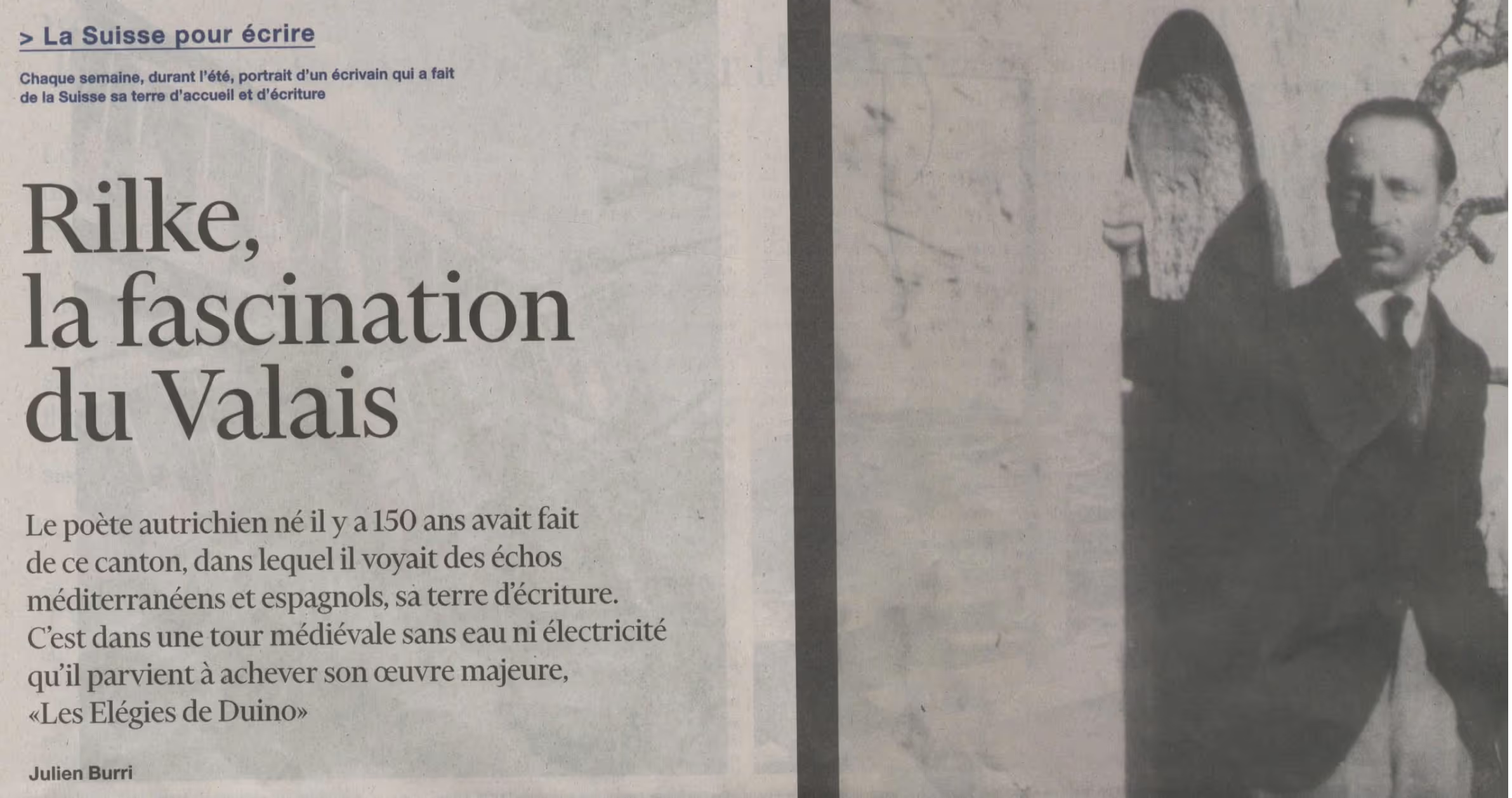
For over a hundred years, press articles from all over the world have documented the reception of Rilke's works. The Foundation's documentation, based on several specialized collections, is constantly being enriched.
Audiovisual media

Audiovisual media

The Foundation documents events and concerts. A large collection of scores bears witness to the many musical compositions inspired by Rilke's works.

Our projects

The Foundation's collections inspire artistic, editorial and educational initiatives in Switzerland and on the international level.

Research projects

Rilke's letters to Elisabeth von Schmidt-Pauli

Sinn und Form 2025

Acquisition of ten letters

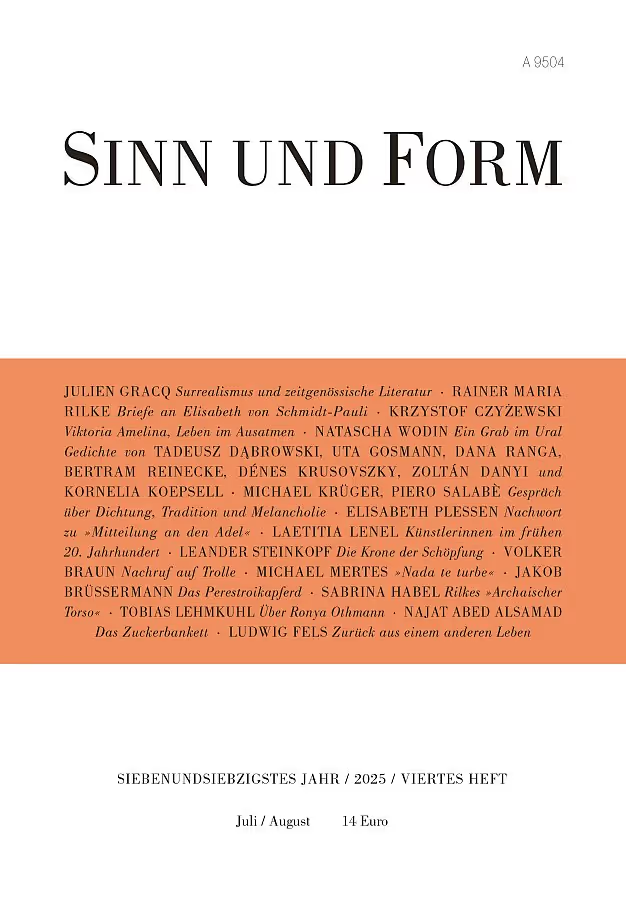
In 2024, the Fondation Rilke acquired ten largely unknown letters from the poet to the writer Elisabeth von Schmidt-Pauli. The results of the publishing project were published in the journal SINN UND FORM in 2025.

Read more

Cultural projects

The Fondation Rilke discovers the collection of artist Sophy Giauque

Sophy Giauque : Portrait. Fondation Rilke

Presentation of results in September 2026

In 2024, the Fondation Rilke acquired the collection of the artist Sophy Giauque. The results of a research project will be presented in September 2026 as part of a temporary exhibition, accompanied by a publication published by Schwabe.

Poem dedicated by Rilke to Sophy Giauque. Fondation Rilke

Historical-critical edition

The Fondation Rilke collaborates with the historical-critical edition of Rilke's works

Despite Rilke's presence on the international book market, a historical-critical edition has long been overdue. Under the leadership of Christoph König, an international team is establishing a new basis for research. The Fondation Rilke hosts the digital hub of this new edition.

Two new volumes

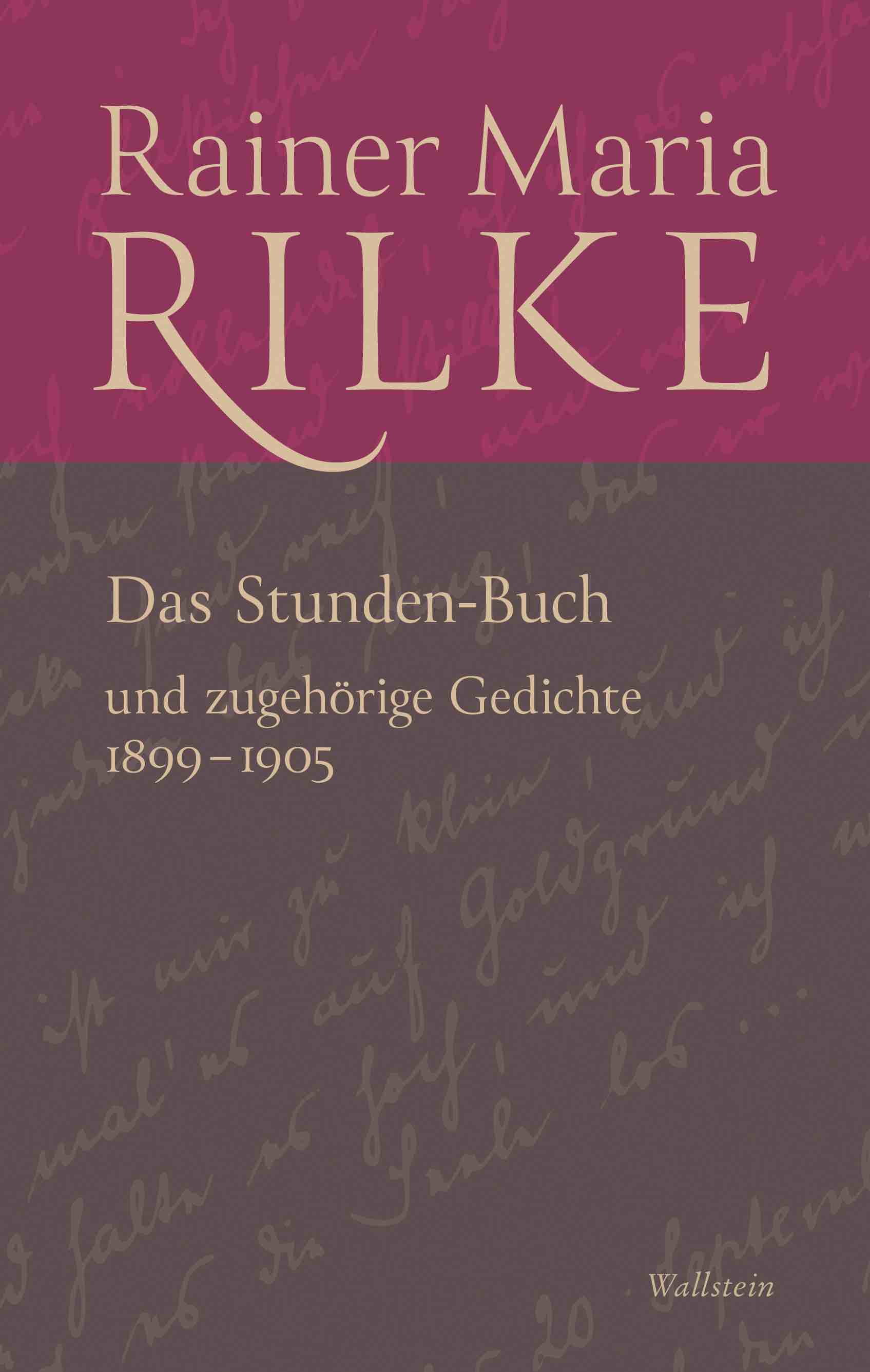
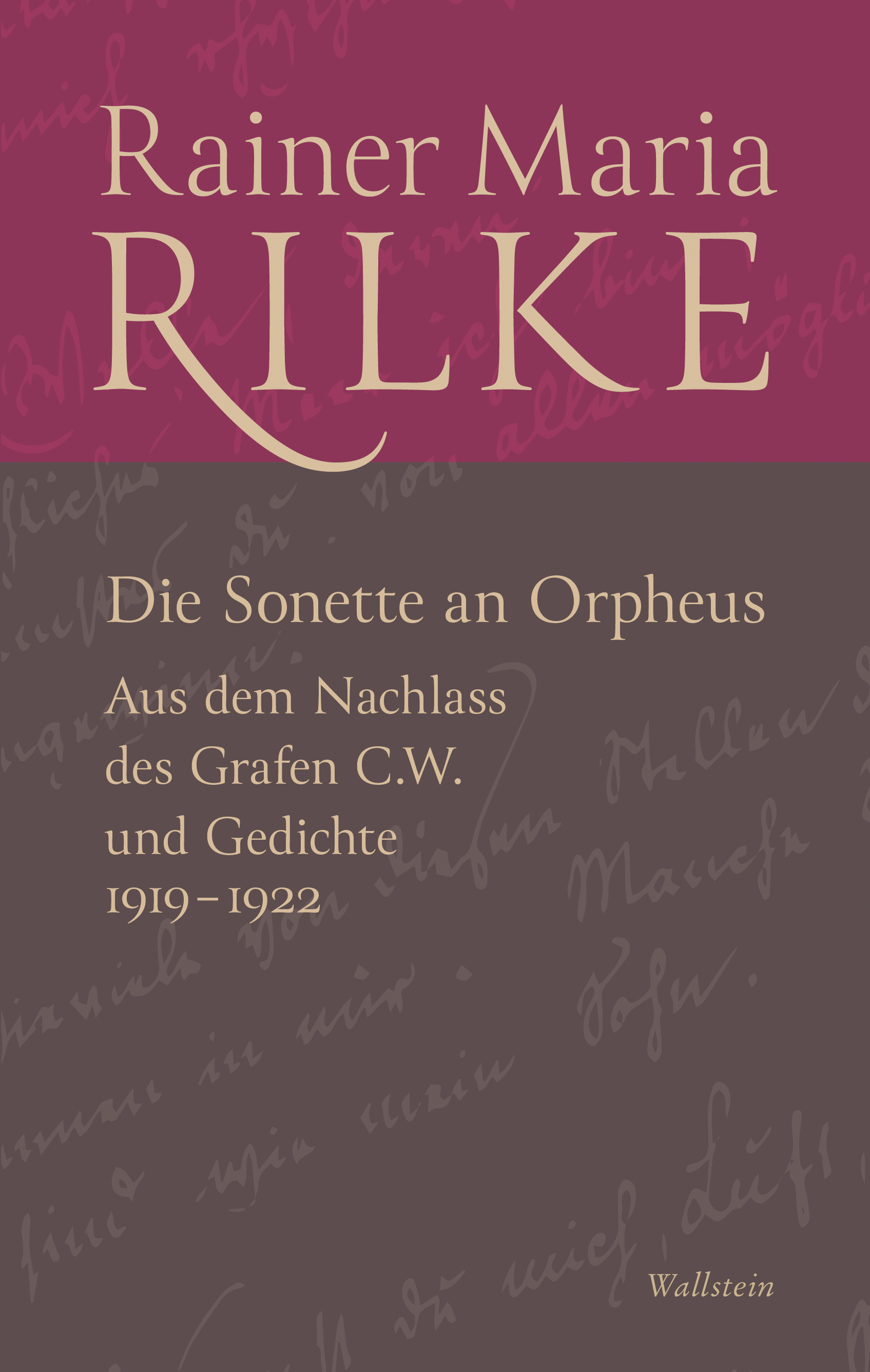
On December 4 at 6pm, the Foundation presents the two new volumes: Das Stunden-Buch (The Book of Hours) and Die Sonette an Orpheus (The Sonnets to Orpheus). The event takes place in the Grande Salle of the Hôtel de Ville in Sierre.

Christoph König, Professor of German Literature and General Editor, Benjamin Krutzky, Editor of the Stunden-Buch, Thedel von Wallmoden, Director of the Wallstein publishing house, and Marcel Lepper, Director of the Fondation Rilke, explain the major project. Actress Miriam Japp reads a selection of poems.

Read more

New publication (1): Das Stunden-Buch und zugehörige Gedichte. Hg. v. Benjamin Krutzky. Historisch-kritische Ausgabe der Werke Rilkes. Hg. v. Christoph König. Göttingen: Wallstein Verlag. November 2025. 648 S., 17 z.T. farb. Abb., Leinen, Schutzumschlag.
New publication (2): Die Sonette an Orpheus. Aus dem Nachlass des Grafen C. W. und Gedichte 1919-1922. Hg. v. Christoph König. Historisch-kritische Ausgabe der Werke Rilkes. Göttingen: Wallstein Verlag. November 2025. 656 S., 19 z.T. farb. Abb., Leinen, Schutzumschlag.

Educational projects

The Fondation Rilke collaborates with schools in the Valais and with the HEP to give students active access to poetry. It offers workshops designed in collaboration with teachers and artists. A selection of the results is on display in the Fondation Rilke Museum. In 2026, the Fondation Rilke supports the Rilke Creative Contest organized by the Goethe Institut in Paris.

"From where I am... I see..."

When museums inspire children: writing and voice at the Rilke Museum

On January 24, 2025, two 7th grade classes from Granges and Veyras took over the Fondation Rilke Museum for a day of poetry. Between writing, putting into voice, sound and rhythm, the pupils produced original creations, the results of which were filmed to give rise to an exhibition at the museum from June 17 to September 30, 2025. For several weeks, the children's voices dialogued with the poet's in the heart of the museum, the invigorating result of a multi-faceted mediation experience.

As the first step in their poetic adventure, the students learned in class about the poet's life, his sojourns in Europe and his love of the Valais, which led to his residence at Château de Muzot. The students then read a poem from the Quatrains valaisans, attentive to the music and rhythm of a language close to the senses. This sensitive approach guided them in their poetic creation, based on close observation of the place: "From where I am... I see, I feel, I hear...". Working in small groups, the students wrote poems inspired by the landscape seen behind the museum's latticed window, or by an image that inspired them: canopy, grove, dry-stone wall, etc.

These texts were then annotated and put to voice, again collectively, extending the work already begun in class in a teaching sequence dedicated to the sensitive reception of poetry and specially designed by the day's two organizers, Francine Fallenbacher-Clavien and Valérie Michelet.

However, the experience at the museum added a new dimension to this preparatory work: that of a place inhabited by the poet's memory and a suspended time - an entire day devoted to creation. Two complementary workshops enriched this moment: one on voice and body, led by actor Mathias Urban, the other on sound and rhythm, led by musician Youri Rosset.

Once their poems had been written, put into voice and set to rhythm, the students performed their creations in front of the camera, recording this unique experience. Their texts, illustrated and colored, came together to form a long poetic ribbon illuminating the museum entrance.

As a souvenir, each participant - students, teachers and lecturers - left the Rilke Museum with a rosebud donated by their Director: a nod to the poet who often sang of their delicate beauty.

The Fondation Rilke

Created in 1986 to safeguard Rilke's archives and memory, the Foundation promotes access to literary heritage and bilingualism. It encourages interdisciplinary research and supports creative projects inspired by the poet's work.

History of the foundation

1956

In 1956, thirty years after the poet's death, a Rilke Society was established. Commemorative days are marked by the installation of a Rilke room at the Château de Villa and the inauguration of a Rainer Maria Rilke street. Paul Hindemith conducts some of his works inspired by the poet. Rudolf Kassner and Maurice Zermatten give lectures. Then, over the years, Jeanne de Sépibus, Jean de Chastonay and Paul-Albert Berclaz put together a Rilke library of several hundred works, laying the foundations for a veritable collection.

1967

In May 1967, Jeanne de Sépibus-de Preux (1886-1977), an aristocrat from Siena, donated the Rilke manuscripts, letters and other memorabilia in her possession to her town. These include the manuscript of the poem "Noyer" and, among the letters, thirty-eight autograph letters from Rilke to Jeanne de Sépibus. These documents are displayed in the Salon Bleu of the Hôtel de Ville in Sierre. After Jeanne de Sépibus's death, another part of her legacy was added, comprising her salon furniture, portraits and photographs. As for the manuscript of the "Quatrains Valaisans" that Rilke gave her with a dedication, it was bought from a London antique dealer, thanks to the initiative of a few Sierrois. It is now part of the Fondation Rilke archives.

1975

In 1975, Sierre celebrated Rilke's 100th birthday. The "Rilke en Valais" exhibition, held at the Manoir de Villa, was the highlight of this Rilkean season. Two years before, Yvonne Vallotton-de Freudenreich entrusted some thirty letters addressed by Rilke to Yvonne de Wattenwyl (as she was known in Rilke's day), as well as several poems transcribed for her. Today, the Foundation also houses the archives of the Rilke-Gesellschaft, an international literary association founded in 1971 in Saas Fee. A digitization project will contribute to the preservation of the founding documents.

1986

On October 1, 1986, the Fondation Rilke was established. The Commune of Sierre handed over all its Rilke collections to the Foundation. In 1987, the Foundation set up its Museum on the first floor of the Maison de Courten, rue du Bourg 30, Sierre. Its aim is to make known, through its collection and activities, the work of the poet who spent decisive years of his life close to Sierre, in the medieval manor house of Muzot. Since then, numerous donations and acquisitions have enriched the collections of the Fondation Rilke , which organizes literary events and exhibitions. The institution owes its genesis to the initiative of the town of Sierre and the work of its founding director, Curdin Ebneter.

2011

The Fondation Rilke presents its first permanent exhibition under the direction of Curdin Ebneter. He was succeeded in 2015 by Brigitte Duvillard, who expanded the literary program and the scope of collaboration with other cultural institutions. In 2024, Marcel Lepper took over the management of the Foundation, deepening the cooperation with universities. He implemented a structural development plan that includes a new digital presence, a new permanent exhibition and a digital center dedicated to the historical-critical edition of Rilke's works (Wallstein, Göttingen), a series of publications (Schwabe, Basel) and deeper cooperation with regional and international partners.

2026

To mark the centenary of the poet's death, the Fondation Rilke is inaugurating a new permanent exhibition and a new site. The project is under the direction of Marcel Lepper. For the first time, the exhibition combines original objects and digital access. The exhibition showcases the Foundation's rich collections and opens the museum's historical architecture onto the landscape. One room is dedicated to temporary exhibitions. Celebrating the jubilee year, rhe Foundation collaborates with the municipality of Raron, the Fondation Gianadda, the Swiss Literary Archives in Bern and the Literary Archives in Marbach, the Pfyn-Finges Nature Park, universities and schools.

Organisation

Prof. Dr. Marcel Lepper
Director
Fondation Rilke
Rue du Bourg 30
CH-3960 Sierre

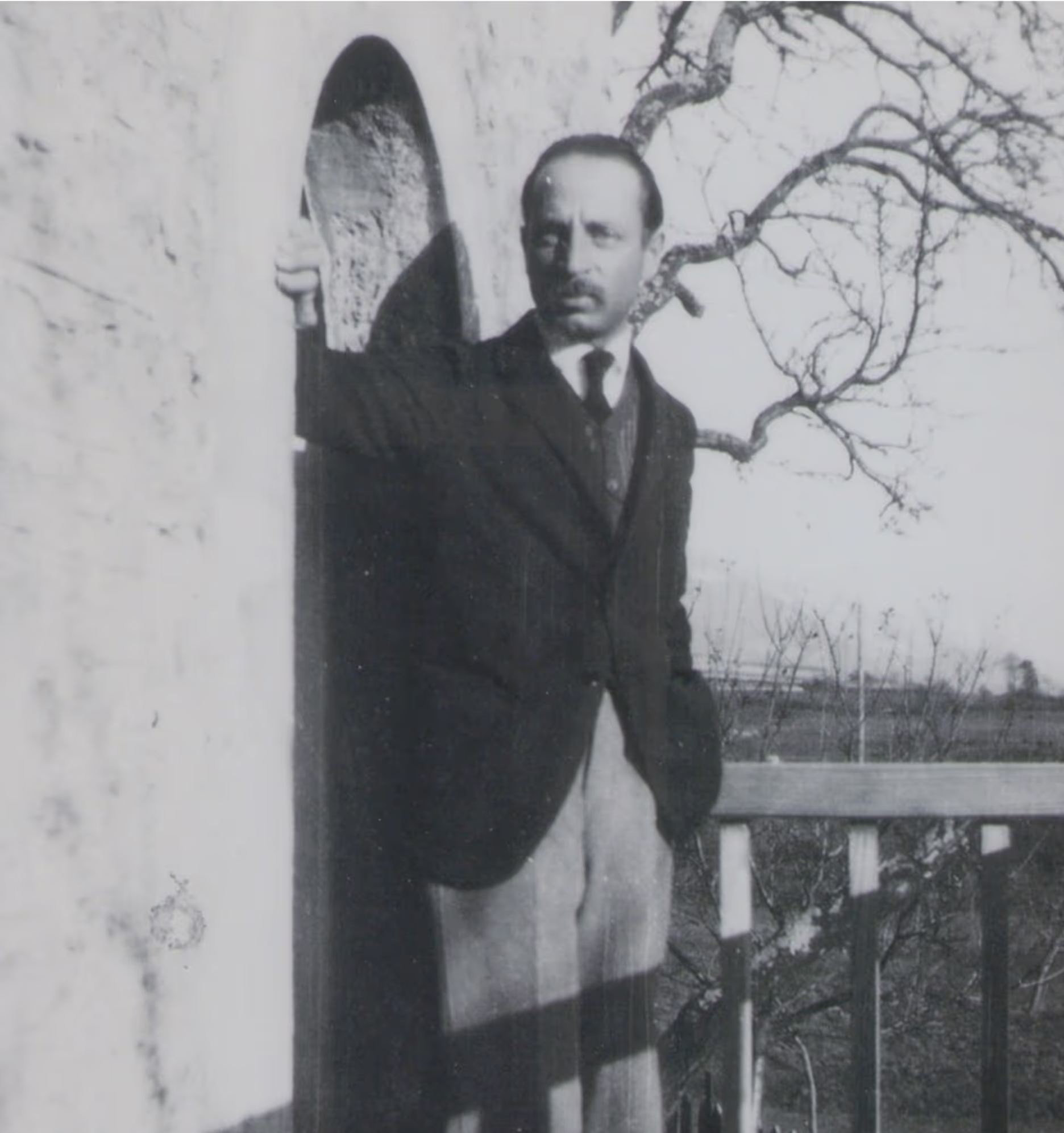
Rainer Maria Rilke stands by the wall of the building.
"HiERSEIN IST HERRLICH."
Rainer Maria Rilke
Our website uses cookies to enhance your experience. See our privacy policy for more information.